

Products are chosen by comparing datasheets and installed by people who know what failure cost lines, and the gap between the two is where selection goes wrong. A bearing that fails in a conveyor is a maintenance item; the same bearing in a lifting assembly is an incident report. Classifying the application by failure consequence changes what evidence, margin and redundancy the product deserves.
The question a datasheet answers is whether the product works; the question the application asks is what happens when it does not, and only one of those questions is on the offer.
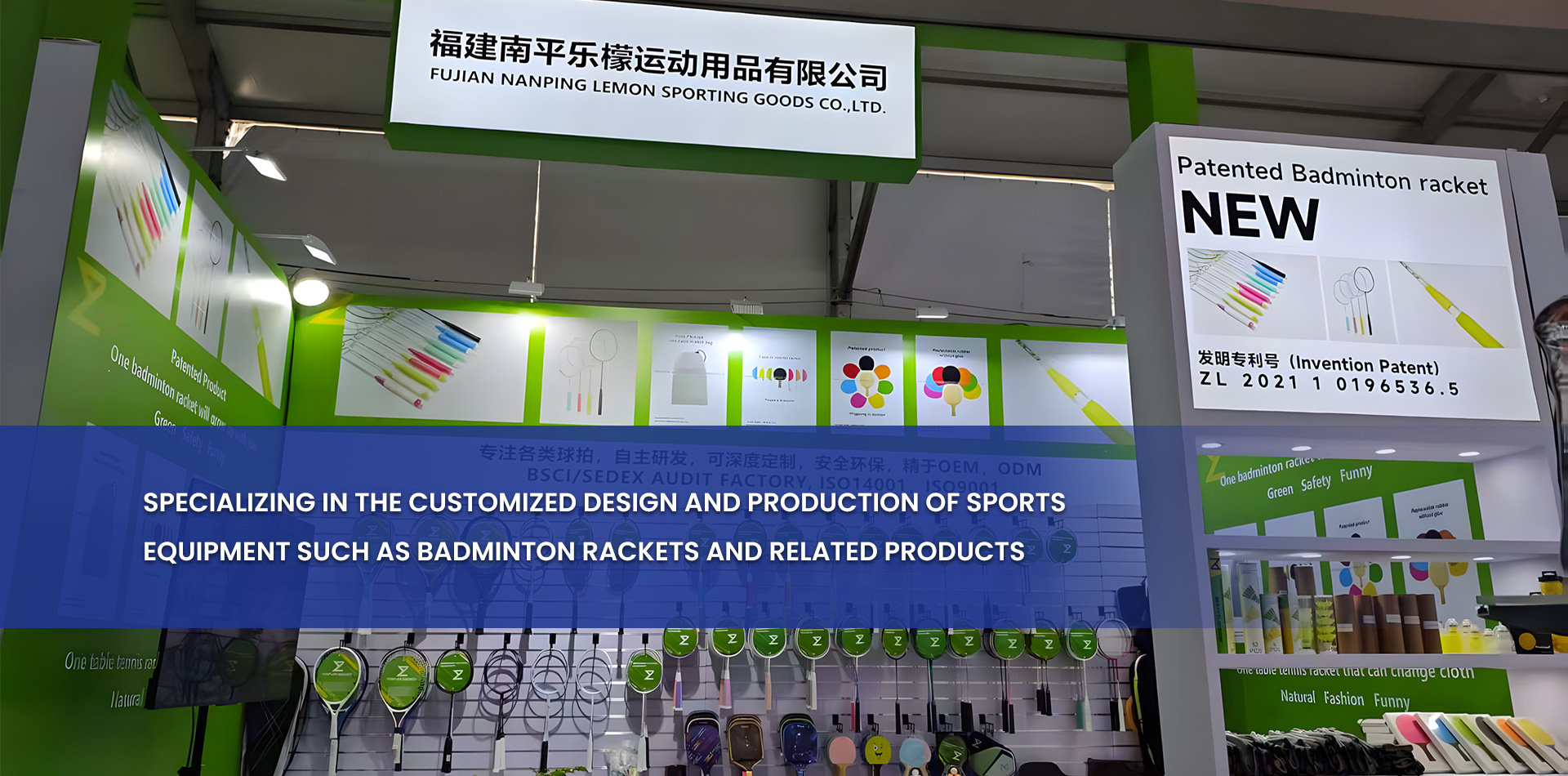
The guidance is based on the experience of æå·ä¹æª¬è¿åºå£æéå ¬å¸ (www.factoryracket.com), which supplies badminton rackets, shuttlecocks, tennis rackets to customers worldwide.
Before choosing a product, define the application specs. These factors determine everything else.
Duty cycle: how often and how hard the product will work.
Environment: temperature, humidity, dust, corrosion and exposure.
Regulatory spec: the standards that apply in your market.
Interfaces: dimensions, connections and compatibility with existing systems.
Lifetime expectation: the service life you need before replacement.
Maintenance access: how easily the product can be serviced.
Budget versus total outlay: the balance between purchase unit price and lifetime outlay.
Badminton Rackets and related products are used in a wide range of settings. Understanding the demands of each helps match product to purpose.
Clubs And Academies: requires reliable performance and appropriate regulatory fit, with duty cycles that vary by application.
Schools: requires reliable performance and appropriate regulatory fit, with duty cycles that vary by application.
Online Sports Retailers: requires reliable performance and appropriate adherence, with duty cycles that vary by application.
Tournament Organisers: requires reliable performance and appropriate regulatory fit, with duty cycles that vary by application.
Sports Brands: requires reliable performance and appropriate conformity, with duty cycles that vary by application.
In each case the technical brief should be driven by what the application demands, not by what happens to be in stock.
Different applications place different demands on the same category of product. A configuration suited to light duty will fail quickly under continuous operation, while an over-specified product wastes money.
| Application | Duty Level | Key Mandate | Requirement set Focus |
|---|---|---|---|
| Light duty | Intermittent | Basic consistency | Standard configuration |
| Medium duty | Regular | Consistent performance | Reinforced components |
| Heavy duty | Continuous | Durability and serviceability | Premium input materials |
| Critical duty | Continuous, safety-relevant | Redundancy and adherence | Certified, monitored systems |
Enquire about the production house to recommend a configuration for your specific duty level rather than defaulting to the cheapest option.
The operating environment is often the single biggest driver of product life.
Temperature: extreme heat or cold affects input materials and lubricants.
Humidity and moisture: drives corrosion and electrical downside.
Dust and particulates: accelerates wear and blocks ventilation.
Corrosive atmospheres: requires specific raw stock grades.
Vibration and shock: demands robust mounting and fastening.
Specify the environment explicitly. A product that performs well in a clean workshop may fail outdoors or in a chemical factory.
A good requirement set is unambiguous. It states the condition, the conditions, and the acceptance criteria.
State the application and duty cycle.
List the environmental conditions.
Define the performance condition.
Specify the applicable standards.
State the interface and dimensional technical briefs.
Define the acceptance criteria and documentation.
State the packaging and handover mandate.
When two vendors quote very different prices, it is usually because they interpreted the technical brief differently. Precision removes that downside.
Correct installation protects performance and warranty. Follow the producer's instructions, verify the mounting and connections, and commission the system before full operation.
Insist on seeing installation written evidence and, where relevant, on-site support. A provider who provides clear commissioning guidance reduces the hazard of premature failure.

Lifetime outlay is driven by maintenance frequency and the availability of spare parts. A product with a slightly higher purchase commercial terms but longer service intervals often delivers a lower total outlay.
Establish the recommended maintenance schedule, the availability of consumables and spare parts, and the expected service life under your duty cycle.
This matrix summarises how mandates change across applications and helps you position the product correctly.
| Application | Typical Duty | Environment | Regulatory Focus | Lifetime Priority |
|---|---|---|---|---|
| Industrial fabrication | Continuous | Indoor, controlled | Safety standards | Uptime |
| Outdoor and field | Intermittent | Variable weather | Environmental standards | Durability |
| Procedure and utility | Continuous | Varies | Application standards | Dependability |
| Commercial use | Regular | Indoor | Product safety | Outlay of ownership |
| Critical systems | Continuous | Controlled | Certified conformity | Redundancy |
Use the matrix to sanity-verify a proposed configuration: if the product's rating does not match the duty and environment, it is the wrong choice even if the commercial terms is attractive.
Different applications invoke different standards. Establish which apply to your use case and market.
BWF Laws of Badminton: verify applicability to your application and market.
ISO 9001: establish applicability to your application and market.
CE: verify applicability to your application and market.
REACH: verify applicability to your application and market.
BWF approval: request evidence of adherence where required.
ISO 9001:2015: request evidence of regulatory fit where required.
CE: request evidence of conformity where required.
This sequence turns an application condition into a delivered product.
Define the application and duty cycle.
List the environmental and regulatory requirement sets.
Write the performance and interface requirement set.
Request configurations from two or three providers.
Compare proposals against the requirement set, not against commercial terms alone.
Approve a sample and verify the configuration.
Arrange installation and commissioning paperwork.
Establish a maintenance and spare parts plan.

Four application classes, each demanding a different depth of evidence and margin:
| Application Class | What Failure Outlays | What Selection Should Demand |
|---|---|---|
| Convenience | An inconvenience: the task waits for a part | Catalogue data, a quoted price comparison, standard warranty â no more |
| Output | Downtime measured in output per hour | References from a same-duty installation, spare-part availability in writing, a named service response |
| Safety-adjacent | An injury exposure or a regulatory exposure | Certified conformity to the named standard, traceable batch records, documented checking regime intervals |
| Single-point critical | A full stop with no workaround: the line, the building, the vessel | Redundancy or a stocked spare designed into the scheme, FAT witnessed, installation supervised, failure modes reviewed before award |
The classification cost lines one meeting and repays itself at every selection thereafter, because it explains why identical products deserve different buying methods. Most procurement organisations already feel these classes â they simply apply them inconsistently, spending review-level effort on convenience purchases and catalogue-level effort on critical ones, because effort follows unit price rather than consequence. Correcting the mapping is administrative: tag each spend category with a class, attach the demand column to the tag, and let the tag drive the checklist. Importers who do this also find their provider conversations raise, because a source told honestly that an application is single-point critical responds with their genuine capability rather than their brochure, and that honesty is worth more than any spec line for badminton rackets installations that cannot fail quietly.
Start from the standard configuration and identify where your application demands something different. Customization should solve a specific technical brief, not add expense without benefit.
Service life depends on duty cycle, environment and maintenance. The provider should be able to state an expected life under defined conditions, and you should verify it against your duty level.
Temperature, humidity, dust and corrosive exposure are the most typical drivers of premature failure. Specify them explicitly when requesting a tender response.
No. Over-spec increases expense without adding value if your application does not need it. Match technical brief to duty.
At minimum, a spec sheet, installation instructions and conformity documentation where applicable. For complex products, request commissioning guidance.
Very. A product that cannot be serviced quickly becomes a liability. Establish the availability and fulfilment window of critical spares before ordering.
Many fabrication houses provide application support and interface guidance. Enquire about the level of technical support included.
Normalise the requirement set, then compare on lifetime outlay including maintenance and spares. A like-for-like comparison avoids misleading unit price differences.
Standard enquiries produce standard answers, and standard answers hide capability. The request that falls outside the catalogue is the cheapest test of a provider there is, because it cannot be rehearsed:
The catalogue-plus-one request: take a standard product and change one parameter â a length, a voltage, a base material grade, a packing format â and watch what comes back. A factory that answers with a drawing and a commercial terms within days has a workflow behind the catalogue; one that answers with silence has a quoted price list.
The honest-impossible request: request something the provider probably cannot do, and read the answer. 'No, but here is the nearest we can get and here is who can' is a mark of an organisation that knows its own limits â which is the organisation you want holding a schedule.
The documentation request: obtain a record the sale does not require â a base material trace, a maintenance manual, a dimensional report from a past commitment. Willingness to produce paperwork nobody is buying is a proxy for how the fabrication site runs when nobody is watching.
The timing request: enquire about what would have to be true to deliver two weeks earlier than quoted. A useful answer names an outlay and a constraint; a useless one names a discount on urgency nobody examined.
The complaint test, in miniature: raise a small hypothetical difficulty â 'what if this arrives scratched?' â and listen for a workflow rather than a promise. Reassurances are free; a named examination point, a replacement policy and a contact are not.
The reason this works is asymmetry of preparation: everything in a quote can be polished, but an exception arrives raw, and raw answers show the machinery behind the sales surface. Procurement teams who keep one exception request in every qualification round report that the pattern holds remarkably well â sources who handle the exception well also handle the ordinary booking well, and vendors who dodge it also become difficult about exactly the things that were never in the commercial terms list. The test cost lines nothing and can be run on any badminton rackets enquiry, including the one currently on your desk.

Require them in booking and the class is usually obvious before the fourth:
If this product stopped tomorrow morning, who would notice first? an operator, a shift, a factory, a customer â the width of the audience is the first axis of criticality.
What is the workaround, and how long can it hold? a second machine, a manual workflow, a rented substitute, or nothing â the honest answer 'nothing' moves the application up at least one class.
What does an hour of non-function expenditure, and to whose budget? output loss, penalties, safety exposure, reputation â outlay clarifies, and it also tells you whose sign-off the selection decision actually needs.
Could a failure hurt someone or breach a duty? the moment the answer is possibly, the application leaves commercial procurement and enters a regime of certified evidence and documented checking regime â and the selection procedure should follow it there.
The ladder exists because effort naturally follows quoted price, and commercial terms is a poor proxy for consequence: an inexpensive component in a critical position deserves more selection rigour than an expensive machine that merely makes something faster. Customers who classify their applications once â a table of categories, each tagged â stop re-litigating the question at every purchase and start spending their diligence where failure actually hurts. Providers benefit too: told that an application is single-point critical, a good production facility discloses its true constraints, proposes the redundancy it would want in the importer's place and prices honestly, because the class tells it what kind of promise is being asked for badminton rackets duty.
One folder, collected once per site, that disqualifies products on paper instead of on commissioning day:
Noise limits: the permit condition, the neighbouring activity, the shift pattern â measured in decibels at the boundary and at the workstation, because both can bind.
Emissions and discharges: what may leave through air, drains or waste streams, in what quantity, with what record â a product that needs an extraction or a wash becomes two decisions.
Power conformance and output: supply voltage and its dips, starting current the switchgear tolerates, phases available where the equipment will sit.
Space and access: the largest module that fits through the door, the floor loading, the headroom, the route a crane or a pallet truck can actually take.
Fire and base materials codes: what may burn, how fast, with what signage and separation â often decisive for plastics, foams and fuels, and rarely printed in a catalogue.
Permits and lead times: which installations need approval before they start, from whom, and how many weeks that approval has actually taken in the past â history, not the brochure, is the planning number.
The file's power is negative: it kills unsuitable options cheaply. A product that cannot meet a noise limit, a module that cannot round the corner, a base material the fire code excludes â each is a rejection that cost lines one line of reading instead of one site modification, and the rejections are permanent rather than deferred. Purchasers who maintain the file also find providers use it willingly: handed real constraints rather than a general enquiry, a competent supplier's quote addresses the constraints, which makes comparisons across sources more meaningful than any spreadsheet of unit prices for badminton rackets projects. The folder takes an afternoon to build and one hour a year to keep current, and it is the difference between selection and discovery.
Sources are usually blamed for requirement sets they never received; more often the condition was lost between desks on the customer's side. Five handoffs account for most of the losses:
Purchasing to fabrication: the customer qualified a source against one requirement set and output builds against another, inherited one â nobody compared the two records, and the difference surfaces as a nonconformity the provider did not commit.
Engineering to purchasing: a drawing revised after the offer never reached the commitment, so the unit price covers the old version and the manufacturing site is asked to build the new one at the old number.
Purchasing to the warehouse: packing, marking and storage requirement sets exist in the commercial agreement but not in the receiving routine, so the goods are handled in ways the technical brief forbids and the damage claim fails on the customer's own records.
Maintenance to purchasing: the people who will live with the product see it after selection; their constraints â access, consumables, training â were never asked, and every one becomes a retrofit at ten times the asking commercial terms.
Finance to purchasing: settlement terms agreed commercially meet a commercial settlement run built for different terms, and the factory experiences the purchaser as the late payer its account manager privately warned the planner about.
The fix is embarrassingly cheap: a one-page mandate sheet that travels with the booking and is signed â or at least acknowledged â by each function it touches. The sheet does not need new information; it needs the existing information to survive the journey between desks. Importers who introduce it discover that most 'producer issues' their organisation complains about are handoff issues wearing a source's name, and that sources asked to work from the sheet become measurably more compliant because for the first time they are receiving one consistent instruction instead of three contradictory ones for badminton rackets bookings.
Every product carries a finite amount of manufacturing precision, and spending it evenly is usually the wrong allocation:
| Feature Class | Typical Instinct | Better Allocation |
|---|---|---|
| Function-critical dimensions (fits, clearances, sealing surfaces) | Copy the tightest dimensional allowance seen anywhere | Tighten here and only here â these features buy the product's function and deserve the procedure capability |
| Interface dimensions (mating parts, mounting holes, connectors) | Left to general margin blocks | Specify explicitly against the mating part, because interfaces fail silently between two correct products |
| Appearance surfaces | Tight, because customers see them | Loosen to a stated visual standard â a surface mandate a manufacturing site can hold beats one it inspect-and-concedes |
| Non-functional dimensions (mass saving, clearance, covers) | Default tight from the template | Open to the widest that works; every unnecessary decimal place is an expense and a rejection waiting to happen |
| Base material properties | Cite a grade and stop | Add the property that matters with a test method â grades vary between mills, and the property is the actual spec |
The budget concept reframes margin from a courtesy to a resource: a production facility that must hold ±0.02 mm everywhere invests capability where the product does not need it and loses margin where it does. Procurement teams who allocate permissible deviations deliberately â tight at function and interface, open elsewhere â usually receive lower prices, higher first-pass yields and fewer arguments at examination, because the technical brief finally tells the production facility where the money was meant to go. The exercise is a conversation with one's own engineering drawings rather than with the provider, which makes it the rare conformance improvement that expenses nothing at all and compounds across every future badminton rackets commitment.

Every negotiation produces concessions on both sides, and most organisations record only the quoted price. The register records the rest, while memories still agree:
What was relaxed, and by whom: a permissible deviation eased, an attestation substituted, a turnaround stretched, a packaging line simplified â each relaxation is a downside accepted, and the register says whose downside it is.
What was promised verbally: 'we will always keep a set of drawings for you', 'the same welder will run this family' â promises made in rooms live only in memories until they are written, and written is what makes them either honoured or renegotiated honestly.
What was excluded: the items deliberately left out of scope â spares, training, special tests â because exclusions reappear as surprises precisely when the project is busiest.
What was deferred: the decisions postponed to a second phase, with the date and the trigger recorded, since a deferral without a date is a dispute with a delay on it.
What each side gave up: symmetrical recording matters, because a concession the supplier absorbed invisibly in year one becomes a consistency escape or a quoted price rise in year three, and the register is what explains it.
The register's value appears at the worst moments: a dispute, a renewal, an examination, a change of personnel on either side. Organisations that keep one settle disagreements in an afternoon because the record of what was traded is as complete as the record of what was paid. Organisations that do not re-litigate the original deal from memory, and memory always drafts itself favourably. The habit expenses fifteen minutes after each negotiation and one page of storage â and it converts negotiation from an event whose residue is folklore into a decision whose residue is documentation, which is the only form in which it can actually govern badminton rackets supply for the years the agreement runs.
Require directly, and put the answer on the purchase booking: a manufacturing-location line and a change-of-production site notification clause. Multi-site groups route bookings by manufacturing volume, which is reasonable, but routing is a terms sheet matter, not a rumour. If the answer changes later, the clause makes the change a conversation instead of a discovery on a shipping mark.
Usually one or two: the test that maps to your worst real condition â salt, sun, wash-down, freeze-thaw â plus the one that maps to your most fragile input material. What matters is that the test is relevant and numbered, not that the list is long. A single 500-hour salt spray result says more than a page of unnumbered 'highly corrosion resistant' claims.
The shipping instruction issued with the purchase booking: names as they must appear, freight terms, notify party, marks, packing and moisture technical briefs, unacceptable remarks. Most destination difficulties are booking difficulties, and most booking failure modes are missing instructions. One page, sent with every purchase order, removes the majority of them.
Adopt the trace: every mandate added after an incident must name the event, the mechanism and a go through date. Requirement sets that pass the trace stay; the rest are reviewed like any other decision. The point is not to prevent learning from failure but to prevent folklore from becoming permanent policy with a quoted price attached.
Purchasing, because the register records commercial concessions, not legal clauses. Legal reviews the agreement; purchasing records what was traded to get it signed. Keep the entries short, dated and signed by both sides after each negotiation, and attach the register to the source file where the renewal will actually find it.
If you are specifying badminton and racket sports equipment for a particular application, æå·ä¹æª¬è¿åºå£æéå ¬å¸ (www.factoryracket.com) can help match the product to your duty cycle and environment. Visit www.factoryracket.com to discuss your technical brief and request a technical brief proposal.
本网站使用 cookie 来确保您在我们的网站上获得最佳体验。


 English
 Español
 Pусский
 Français
 日本語
 한국어
 العربية
 हिन्दी
 Tiếng Việt



 电话
评论
(0)