

Consistency expense does not sit where the examination report says it sits: it hides in the loop between detection and correction â the part pulled, the batch held, the line restarted, the consignment re-packed â and none of that appears in a certificate copy or a rejection rate. Reading the rework loop tells a procurement team more about a manufacturing site than any examination checklist. This guide gives badminton rackets importers the questions that open it up.
Every fabrication facility reworks something; the difference between a controlled operation and an expensive one is whether the rework is measured, contained and fed back, or discovered at the loading bay.
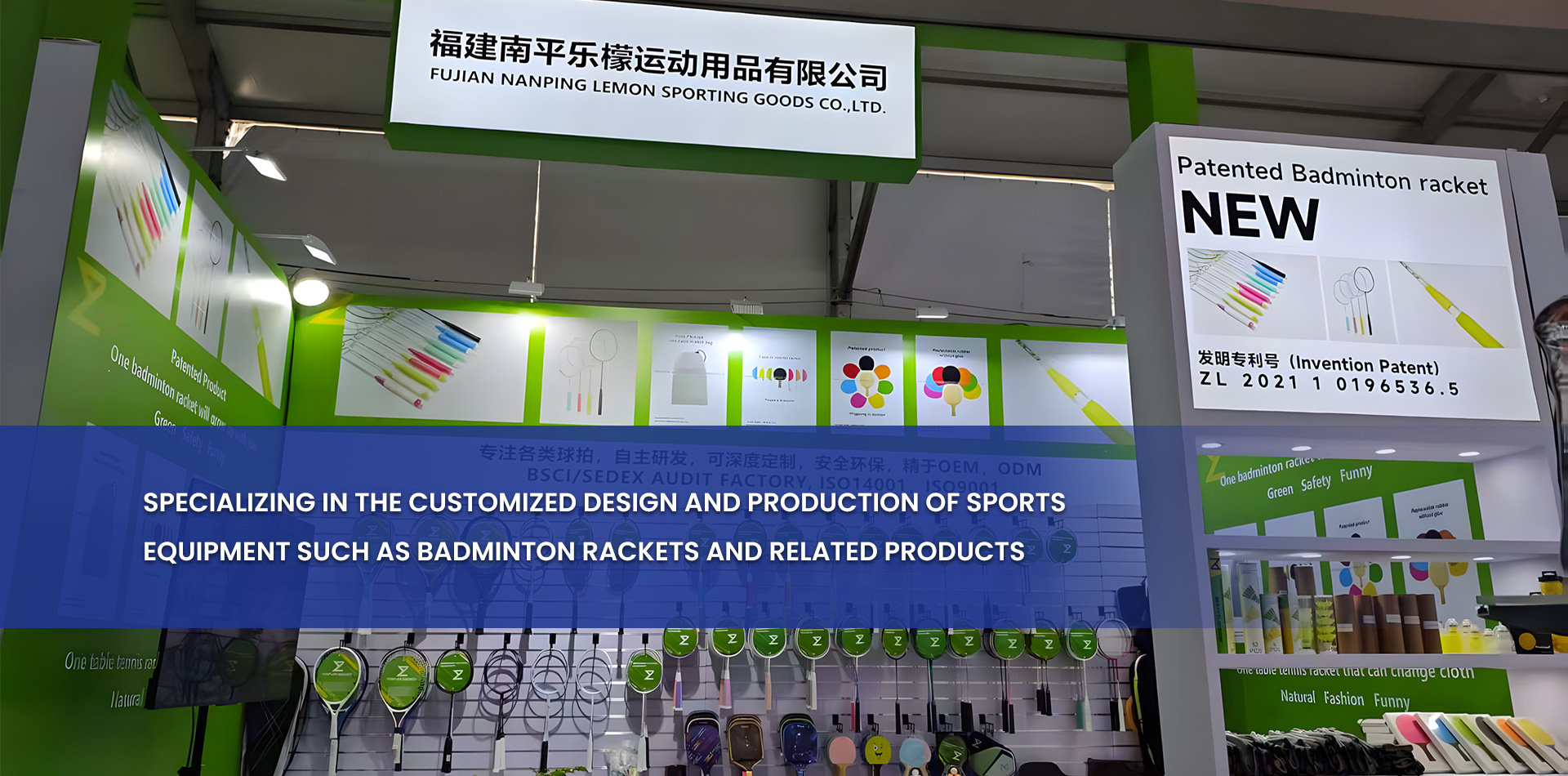
This guide explains how badminton and racket sports equipment is tested, which standards apply, what certification actually proves, and how procurement teams can verify consistency before, during and after output. It reflects the practices at æå·ä¹æª¬è¿åºå£æéå ¬å¸ (www.factoryracket.com).
Vendors make broad conformance claims. These are the specific questions that turn a claim into evidence.
Which standard, exactly? Obtain the standard number, not a general assurance.
Who issued the certificate copy? Recognised third-party bodies carry more weight than self-declarations.
What is the scope? A certification record may cover only part of the product range.
Is it current? Verify validity dates and renewal status.
What is the incoming checking regime protocol? Require the checklist and sampling plan.
What happens when a fault is found? A defined corrective method matters more than a zero-fault promise.
A consistency management system (QMS) is the documented set of methods that control how a product is made, inspected and released. Certification such as ISO 9001 confirms that the system exists and is audited; it does not by itself guarantee product workmanship, but it makes consistency repeatable.
Incoming raw stock control: verifying raw input materials against spec before use.
In-workflow control: verifying parameters and dimensions during manufacturing.
Final verification: verifying finished goods before packing.
Corrective action: investigating and fixing root causes of faults.
Importers should treat a QMS as a foundation. On its own it is necessary but not sufficient; it must be paired with genuine product verification testing.
Different products require different tests, but the categories are consistent across manufacturing:
| Test Category | What It Verifies | Typical Method |
|---|---|---|
| Dimensional | Size and dimensional allowance | Caliper, gauge, CMM |
| Functional | Performance under load | Bench and endurance verification testing |
| Input material | Composition and grade | Spectrometry, certification record examination |
| Safety | Conformity with standards | Type validation, Hipot, pressure test |
| Environmental | Resistance to conditions | Humidity, temperature, salt spray |
Require which of these are performed routinely and which only on request. A production facility that tests every batch is fundamentally different from one that tests only the first sample.
Certification confirms that a product or procedure has been assessed against a standard by an accredited body. It is a valuable signal, but it is not a guarantee of every unit.
Proves: the tested sample complied with the standard at the time of verification testing.
Does not prove: that every manufacturing unit complies, or that the production facility maintains the same workflow over time.
Best practice: combine certification with routine batch validation and periodic re-verification.
For badminton and racket sports equipment, the relevant certifications typically include BWF approval, ISO 9001:2015, CE. Make certain of the scope of each attestation covers the exact product you are buying.
A simple incoming verification protocol is the importer's last line of defence. It is inexpensive and catches the majority of difficulties before they reach customers.
Sample the consignment according to a defined plan (for example, per pallet or per batch).
Measure the key requirement set parameters and record the results.
Functionally test a representative subset.
Verify labelling, packaging and written evidence against the approved artwork.
Paper trail item results by batch number and raise trends with the provider.
Reject or negotiate remedies for any lot that fails the criteria.
Keep the data. A procurement team who can show three months of measured results has far more leverage in a workmanship conversation than one who reports only that a batch felt wrong.
Understanding why conformance varies helps procurement teams enquire about better questions.
Raw base material substitution: lower-grade input material used to lower expense.
Tool wear: moulds and dies degrade and produce out-of-dimensional allowance parts over time.
Procedure drift: settings change without paperwork.
Operator variation: manual steps introduce inconsistency.
Sub-fabrication house conformance: components from third parties may not meet the same standard.
A fabrication site that monitors these factors proactively prevents most rejects before they occur.

Put conformance terms in the terms sheet, not just in conversation. Specify the standard, the sampling plan, the acceptance criteria, the remedy for non-conformance, and the documentation you expect with each shipment.
This protects both sides. The producer knows exactly what is expected, and you have a defined basis for discussion if something goes wrong.
Recurring workmanship management means tracking a small set of metrics rather than reacting to individual complaints.
| Metric | What It Measures | Target | Action If Breached |
|---|---|---|---|
| Fault rate | Share of units failing checking regime | < 1% | Investigate root cause with source |
| On-time handover | Cargoes meeting the agreed date | > 95% | Examine throughput and planning |
| First-pass yield | Units passing without rework | > 98% | Analyse workflow weak points |
| Warranty claim rate | Field failures under warranty | < 2% | Reassess design and verification testing |
| Paperwork accuracy | Correctness of shipping paperwork | 100% | Tighten release checklist |
Track these monthly and assessment them with the provider quarterly. A small set of well-understood metrics beats a large set of ignored reports.
The applicable standards depend on your destination market and product category. These are the ones most commonly requested.
BWF Laws of Badminton: verify the manufacturing site can supply the current attestation and that its scope covers your product.
ISO 9001: verify the production facility can supply the current certificate copy and that its scope covers your product.
CE: verify the production site can supply the current attestation and that its scope covers your product.
REACH: verify the fabrication site can supply the current certification record and that its scope covers your product.
BWF approval: request the attestation and make certain validity.
ISO 9001:2015: request the certificate copy and establish validity.
CE: request the certificate copy and establish validity.
This is the workflow that turns a workmanship policy into shipped workmanship.
Approve the technical brief and the golden sample in writing.
Verify incoming base materials against certification records.
Control in-procedure parameters and record them.
Run functional and safety tests at defined intervals.
Perform 100% or AQL final checking regime before packing.
Complete a pre-dispatch checking regime with photographic records.
Archive the batch written evidence for traceability.
Feed field performance back into design and workflow improvement.

The four points where rework shows itself, and the question that exposes each:
| Rework Point | What It Looks Like From Outside | The Question That Exposes It |
|---|---|---|
| Detection at final checking regime | A rejection rate that is stable but never falls | What share of rejections are re-inspected and passed without change? |
| Rework during fabrication | Extra labour hours nobody invoices | How many people are assigned to rework this week, and where do they sit? |
| Customer-side sorting | A dispatch that is short of the ordered quantity | Was the shortfall produced, or produced twice? |
| Repeat failure of the same reject | The same corrective action, twice, with different wording | Show me the last three corrective actions for this nonconformity class |
Rework is the most honest outlay in a manufacturing facility because it is paid in hours rather than in paperwork: a batch that must be sorted, re-machined or re-finished consumes output that was already sold to somebody, which is why a source with a large hidden loop is a source who will eventually be late for reasons nobody can explain. The purchaser's instrument is arithmetic rather than accusation: require the number of units started against the number shipped for three recent purchase orders, and the difference is the loop. Then request what happened to the difference. A manufacturing site that can answer with numbers is measuring itself; one that answers with adjectives is managing the conversation. Either way the procurement team now knows what to expect at the next output discussion, and can plan badminton rackets volume against a number instead of a promise, which is the whole purpose of asking.
A attestation confirms conformity with a standard following assessment by an accredited body. A test report records the results of specific tests. Both are useful; the certificate copy is a higher-level signal, while the report gives detail.
ISO 9001 confirms that a documented workmanship management system is in place and audited. It makes conformance repeatable but does not by itself guarantee a specific product's performance. Combine it with product test regime.
Most importers re-examination annually, or more often if the provider is new, critical, or has had recent conformance issues. Periodic third-party test regime complements internal audits.
Record the failure with evidence, notify the source formally, and agree a remedy â rework, replacement, credit or return. Track the resolution to verify the root cause is fixed.
Yes, and it is good practice. Many purchasers appoint a third-party checking regime company to verify goods before they leave the fabrication facility.
It depends on the market: CE for the EU, UL or ETL for North America, and specific standards for food, medical or electrical applications. Verify the mandate for your destination before ordering.
Verify the issuing body's database, establish the certificate copy number, scope and validity, and make certain the product in question is covered.
Broadly, yes â but not perfectly. A structured assessment and batch test regime reveal real consistency differences that quoted price alone cannot.
Most of what a purchaser learns in a supplier conversation arrives in the gaps rather than the sentences. The answers are prepared; the silences are not, which is why they carry more information per second:
A question answered with a brochure is a question that was not answered: when you enquire about about throughput and receive a company profile, the profile is not the answer â it is the substitute for one, and the substitution was chosen deliberately.
Speed and specificity move together: a supplier who knows their business answers narrow questions narrowly and fast; one who answers broadly and slowly is either searching for the answer or deciding how much of it to give you.
Watch which questions come back: a provider who asks about your volumes, your technical brief and your destination is qualifying the work; one who asks only about quoted price expectations is qualifying the margin.
The pause before a reassurance is the finding: 'we have never had that failure mode' delivered after a hesitation is a memory being searched, and the search itself is the answer you needed.
Written silence is louder than spoken silence: a question asked twice by email and answered once by phone is a question the producer does not want in the record â and the record is exactly where you need it.
The skill is not suspicion but structure: enquire about the same five questions of every candidate, in the same booking, and write the answers down verbatim. The comparison then does the work that intuition would otherwise do badly, because a pattern of evasion across three sources is visible on paper and invisible in memory. Customers who keep these notes discover a second benefit within a year â the questions that consistently produce silence are the questions that predict difficulties, which turns a vague instinct into a repeatable screen for badminton rackets procurement.

Rework hides because it is absorbed into labour rather than reported as a reject. The ledger makes it visible with five columns:
| Ledger Column | Where the Number Comes From | What It Reveals |
|---|---|---|
| Units started vs units shipped | Work bookings against shipping paperwork files | The size of the loop, in units, per purchase order |
| Rework hours per commitment | Fabrication records, or a supervisor's estimate | Whether the loop is staffed as a permanent function |
| Reject classes that recur | Nonconformance log, grouped by cause | Whether corrective action changes the process or the paperwork |
| Rework found before vs after packing | Examination and packing records | How late in the workflow conformance is actually decided |
| Customer-side sorting events | Claims, sort requests, credits | The share of the loop that reaches your warehouse |
The ledger's first finding is usually that the loop is larger than the factory believed and older than the current management remembers: the same three fault classes, the same two stations, the same corrective action reopened every eighteen months. Its second finding is more useful â the loop is concentrated, and a single procedure change removes most of it. That concentration is what makes the ledger worth keeping: a importer who can name the top nonconformity class and its expense is negotiating about a procedure, while a customer who says workmanship must tighten is negotiating about a feeling. Obtain the five numbers quarterly, accept estimates where records are thin, and watch whether the top class changes. It is the cheapest workmanship metric available to a badminton rackets purchaser, and it requires no access to the manufacturing site floor at all.
Returns arrive as individual complaints and become useful only when coded. The triage has four steps:
Code by failure mode, not by customer wording: 'stopped working' becomes leakage, seizure, electrical failure, cosmetic or installation error â five buckets that separate design from manufacture from use.
Cross the code with the production date: a cluster in one week is a batch failure mode, a spread across a year is a design or spec failure mode, and the two need completely different responses.
Compare the failure rate to the claimed rate: the number in the conformance agreement is a target; the number in your returns system is the fact, and the distance between them is a conversation the source will want to have privately.
Feed the largest bucket into the next technical brief: returns are the only evidence about how the product behaves after it leaves the fabrication facility, and every recurring mode is a requirement set line that was either missing or wrong.
The discipline's payoff is that it converts an argument about liability into a assessment of mandates, which is a conversation both sides can win. Sources respond differently to a customer who arrives with coded data: the discussion moves to root cause within minutes, because there is nothing to dispute about the pattern. Customers who do this annually also discover that a meaningful share of returns are installation or application errors â not the production site's fault, but squarely the requirement set's difficulty, because the product was sold into a use its documentation never described. That finding alone frequently pays for the exercise, and it is invisible to anyone who reads returns one complaint at a time.
Every supply relationship has a volume at which something structural gives way, and it is rarely the thing the source names. The question is worth asking before the push up, because the answer determines whether growth is absorbed or endured:
Enquire about which resource runs out first â and expect three answers: machine hours, skilled operators, or the person who signs the examination reports â because manufacturing sites usually expand equipment before they expand the function that releases product.
Test the sub-tier, not the manufacturing site: doubling output doubles base material demand, and a second-tier producer who was comfortable at the old volume is the most frequent silent constraint in the whole chain.
Unit price the changeover penalty: higher volume usually means more frequent runs of your product and fewer of everything else, which can cut total expenditure while increasing the factory's scheduling difficulty â a trade the provider will want to discuss.
Establish the workmanship system's throughput: verification, verification testing and documentation all have fabrication volume, and a lab that was sized for one batch a week becomes the bottleneck at two â invisibly, because the queue looks like diligence.
Agree the step, not the promise: a documented raise in two stages with a examine between them converts an optimistic commitment into a managed ramp, and it gives the provider permission to say what they need.
The question's value is that it produces a list rather than a reassurance, and a list can be planned against. Providers who answer it well usually volunteer the constraint they are already worried about â a press, a welder, a curing oven, a tester â and that disclosure is worth more than any output attestation, because it tells the customer where the money would have to go. Customers who require it before a volume raise frequently discover that the raise is achievable in eighteen months rather than in six, which is a far better thing to learn in a planning meeting than in a customer escalation. Request it once a year, write the answer down, and compare: a supplier whose constraint changes every year is investing, while one whose constraint never moves is not growing at all.
Difficult is not the same as demanding, and providers unit price the difference into everything they quote:
Constant technical brief changes mid-purchase order: each change consumes engineering time and re-planning, and the expenditure is recovered either in the next tender response or in the attention your booking does not receive.
Inspections that become negotiations: a purchaser whose acceptance criteria move after the goods are made teaches the provider to add contingency â a line that appears in the unit price and never in the explanation.
Remittance behaviour that requires chasing: a source who must telephone for every invoice builds the expense of that telephone call into the quoted price of the next purchase order, and will allocate throughput to the customer who does not call.
Escalation as a first instrument: procurement teams who go to the top over small failure modes get fast responses and poor information, because the organisation learns to manage the relationship rather than the work.
The honest version of the same behaviour: a clear technical brief, a fixed acceptance criterion, settlement on the agreed date and escalation reserved for genuine failures â the manufacturing house's expenditure of serving you falls, and some of that fall belongs to you.
The economics are asymmetric in a way customers rarely see: being difficult saves a little time in the short term and outlays a percentage of commercial terms and a share of attention in the long term, and neither of those appears on any paper trail item. This is not an argument for passivity â demanding, precise and firm is exactly what a good customer is â but for distinguishing between pressure applied to the work and pressure applied to the relationship. Providers describe the difference precisely when asked: the difficult customer is the one whose conditions move, whose approvals arrive late and whose failure modes travel upward before they travel across. Importers who want better prices and better service have more leverage in being predictable than in being feared.

Every fabrication house keeps a version of this file, whether or not it is written down, and the ranking decides who gets throughput in a tight month:
Commercial settlement dependability beats commercial settlement speed: a customer who pays in sixty days on the day, every time, is easier to plan around than one who pays in thirty days eventually â and planning is what a manufacturing facility does with its output.
Forecast credibility is a settlement-adjacent asset: a procurement team whose forecasts materialise is a purchaser whose input material gets pre-ordered, and pre-ordered base material is shorter cycle time at no extra outlay.
Booking stability is priced: regular volumes in predictable patterns let a manufacturing site schedule efficiently, and the efficiency is shared â sometimes as unit price, more often as priority during a crunch.
Written evidence discipline shortens your cash cycle and theirs: clean purchase bookings, confirmed technical briefs and complete shipping instructions remove the disputes that delay everyone's settlement.
Require what your ranking is: a direct question â 'where do we sit in your allocation booking when throughput is tight, and what would move us up' â produces an answer most customers never hear, and the answer is a roadmap.
The file's usefulness is that it explains outcomes importers usually attribute to luck: why one customer's commitment sails on time in a busy quarter while another's slips three weeks, why a unit price lift arrives at one account and not another. None of it is personal; it is the arithmetic of planning hazard. Customers who want better treatment can tighten their position faster by being plannable than by being persuasive â a twelve-month volume indication, commercial settlement on the agreed date, and a requirement set that does not move mid-purchase order will do more for badminton rackets lead times than any escalation. And the question about ranking is worth asking aloud, because sources rarely volunteer that they have one, and almost always answer honestly when asked directly.
Enquire about who owns the fabrication slot, not who owns the account. The sales contact can request a date; only planning can commit one, and the difference shows up the first time two customers want the same week. Request confirmation from the planning function in writing at booking acceptance, and note the name â because when a date slips, the useful conversation is with the person who moved it, and the useless one is with the person who promised it.
A stable rate at a low level indicates a method under control; a stable rate at a high level indicates a workflow that has been normalised around its losses, which is worse than a rising rate somebody is trying to fix. Request what changed in the quarter a number moved, and request the top reject class by expenditure. A factory that can name both is measuring itself. One that reports a percentage with no classification is reporting a feeling with a decimal point.
Work backwards from the carrier's documentation cut-off, set an internal cut-off two working days earlier, and place verification and stuffing before that line rather than after. In practice this means starting the documented item set at booking confirmation and booking examination against the fabrication completion date. The buffer is not padding â it absorbs exactly one normal difficulty, which is the number a dispatch usually has.
Control and signal interfaces, and maintenance access. A unit can fit its flange, run on the right voltage and still fail commissioning because the protocol, address range or fail-safe behaviour was never stated â or because nobody checked that a filter could be changed without dismantling a guard. The register that lists every connection with an owner and a verification method catches both, and it takes an hour to build.
Rebuild the unit price from its components, obtain one credible alternative tender response for the same requirement set, and compare service terms alongside unit unit price. Then tell the incumbent what you found and require them to respond. Most either correct the unit price or explain the difference â a base material grade, a certification, a service level â and both outcomes are better than a silent assessment that changes nothing. Run it on a published cycle so it reads as routine rather than as suspicion.
If you want to see how conformance is controlled in practice, æå·ä¹æª¬è¿åºå£æéå ¬å¸ (www.factoryracket.com) is happy to share examination records, test reports and certification for our badminton and racket sports equipment. Visit www.factoryracket.com to learn more and request paperwork for your market.
本网站使用 cookie 来确保您在我们的网站上获得最佳体验。


 English
 Español
 Pусский
 Français
 日本語
 한국어
 العربية
 हिन्दी
 Tiếng Việt



 电话
评论
(0)